

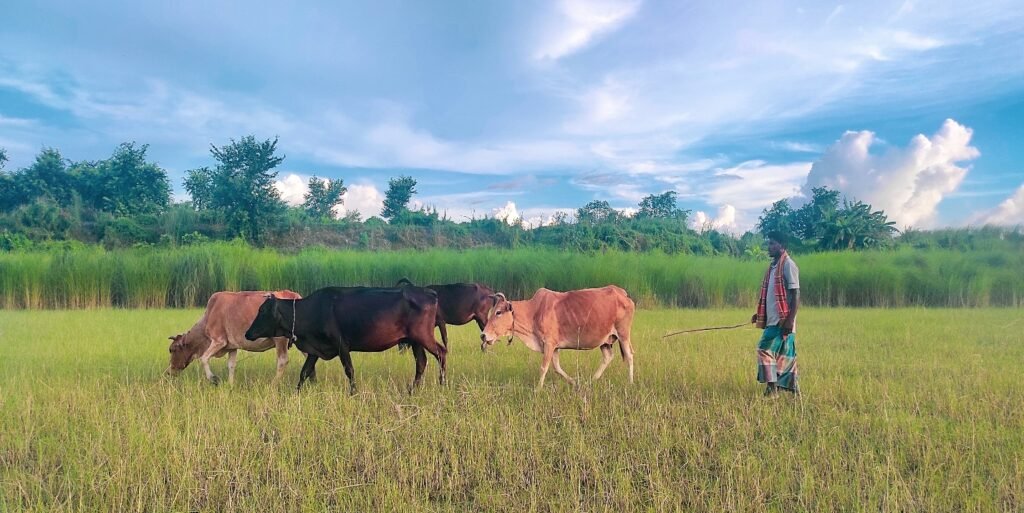
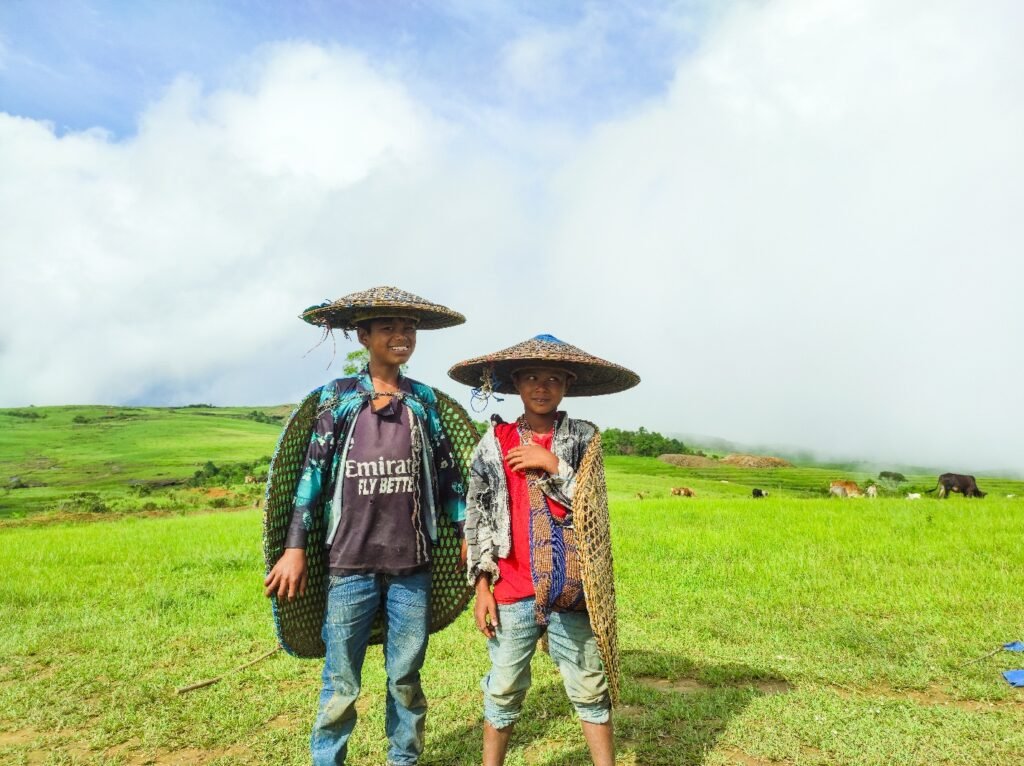
In many parts of the Global South, livestock production does not take place behind factory gates or within fenced industrial farms. Instead, animals are woven into everyday life. Cattle, goats, poultry, and sheep often live beside homes, share courtyards with children, drink from community ponds, and move freely across agricultural landscapes. For millions of smallholder farmers, livestock is not merely an income-generating activity; it represents food security, cultural identity, social status, and a critical safety net during times of economic stress.
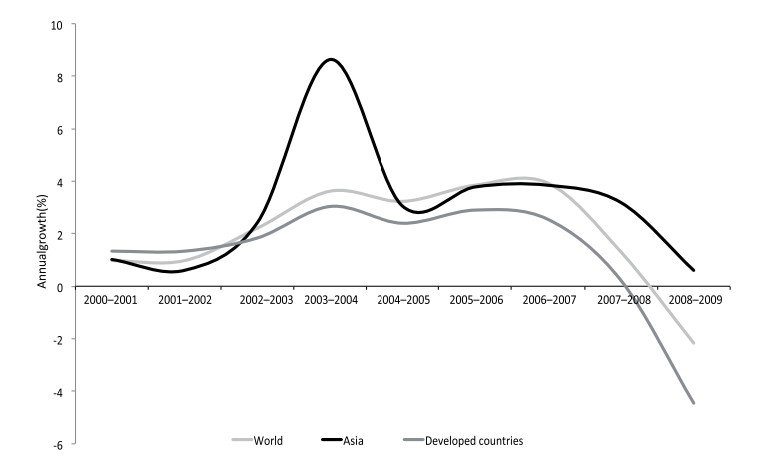
This intimate human–animal relationship sustains livelihoods, yet it also creates complex and often invisible risks. Everyday livestock management practices—shaped by tradition, necessity, and limited resources—quietly influence public health, environmental integrity, and the long-term sustainability of food systems. What appears normal at the household level may contribute to zoonotic disease transmission, antimicrobial resistance, water contamination, and climate vulnerability at regional and global scales.
This article draws on field-based research conducted among rural livestock-keeping households in Bangladesh. While the study is locally grounded, its findings reflect challenges common to smallholder livestock systems across Asia, Africa, and Latin America. By examining real-world practices and constraints, the article highlights how sustainability failures emerge not from farmer negligence, but from systemic gaps in knowledge, infrastructure, and institutional support.
Why Smallholder Livestock Systems Matter Worldwide
Smallholder farmers produce a substantial share of the world’s animal-source foods, particularly in low- and middle-income countries. Globally, livestock contributes roughly 40 percent of agricultural GDP and supports the livelihoods of more than 1.3 billion people. For rural households, animals function as living assets, providing milk, meat, manure, draft power, and emergency income during financial shocks.
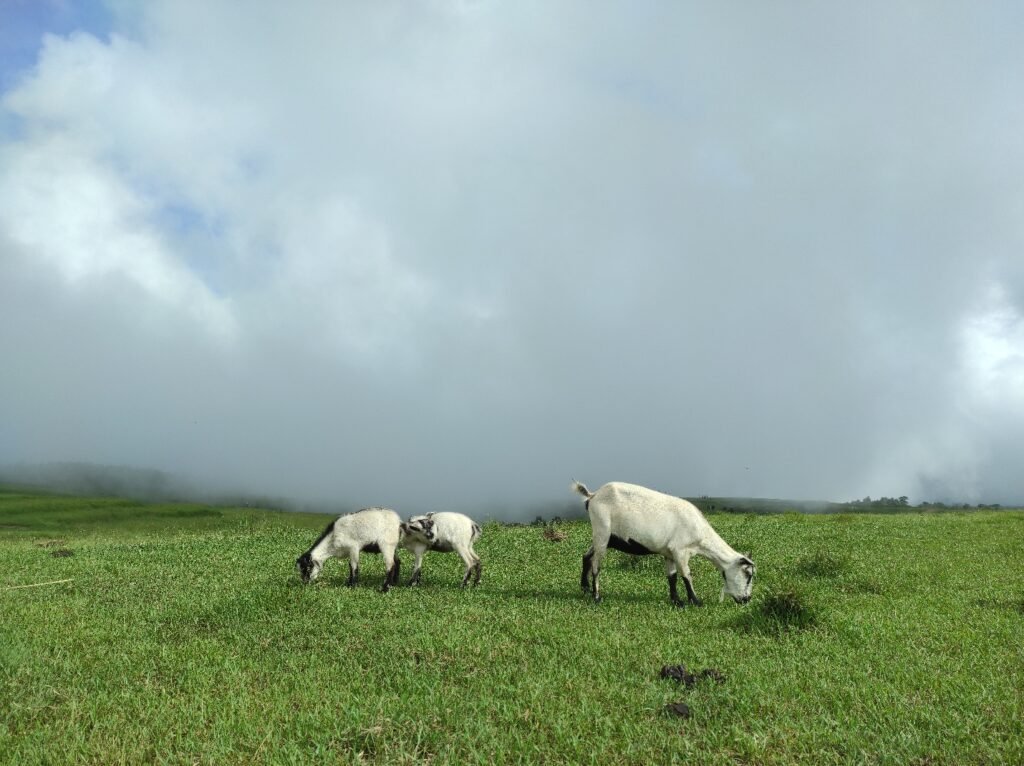
However, rising global demand for animal protein has intensified pressure on smallholder systems without a parallel expansion of veterinary services, environmental safeguards, or farmer education. As a result, productivity gains are often pursued through informal or risky practices that compromise animal welfare, human health, and ecosystem stability.
Field observations reveal this tension clearly. Farmers operate at the intersection of survival and sustainability, balancing immediate economic needs against long-term risks that often remain poorly understood or impossible to address with existing resources.
Housing, Proximity, and Daily Exposure
One defining feature of smallholder livestock systems is the physical closeness between humans and animals. In the study communities, 39.3 percent of farmers reported that livestock shelters were directly attached to their living houses, while the remaining households kept animals in close proximity within the homestead. This spatial arrangement increases daily exposure to animal waste, dust, and pathogens, particularly for women and children.
Bedding materials also pose risks. Nearly 29.8 percent of farmers used edible materials such as straw or crop residues for animal bedding, which can become contaminated with feces and urine. These materials are often later reused or disposed of in open environments, facilitating pathogen circulation.
Such housing patterns are not unique to Bangladesh. Comparable arrangements have been documented in rural India, Nepal, Ethiopia, and parts of Latin America, underscoring a shared structural reality: when space and resources are limited, separation between human and animal environments becomes a luxury.
Feeding Practices: Productivity at a Cost
Livestock feeding strategies among smallholder farmers prioritize affordability and availability. Most rely on natural grasses, crop residues, kitchen waste, and agricultural by-products. When managed carefully, these practices can be environmentally sustainable. Problems arise, however, when feed sources are exposed to chemical inputs or when productivity pressures encourage unsafe interventions.
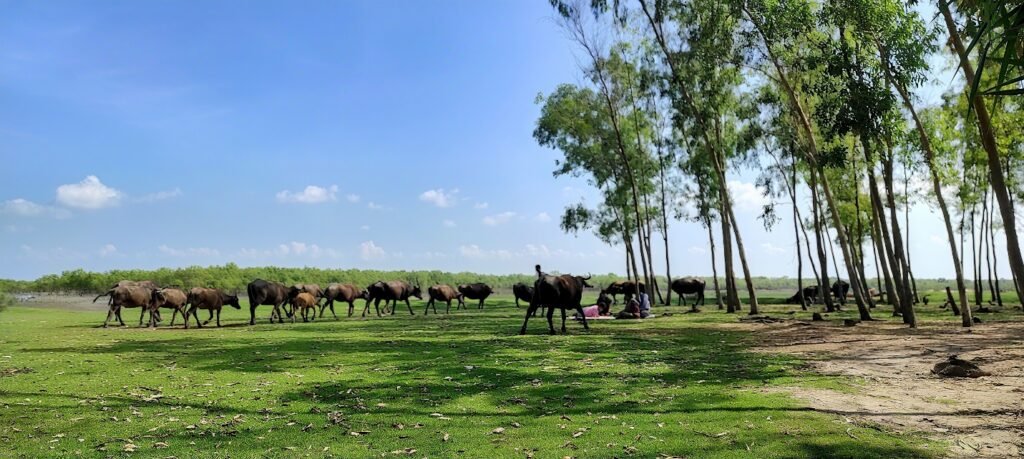
Field data indicate that grazing areas are sometimes treated with pesticides or herbicides to accelerate grass growth. In addition, informal use of medicines or injectable substances as growth enhancers was reported anecdotally during field observations. While these practices aim to improve animal weight and market value, they carry significant risks.
Chemical residues can accumulate in meat and milk, entering the human food chain. Even more concerning is their contribution to antimicrobial resistance. The misuse and overuse of veterinary drugs in smallholder settings is now recognized as a major driver of antimicrobial resistance globally, threatening the effectiveness of modern medicine.
These findings echo broader trends across the Global South, where limited regulation and weak veterinary oversight allow hazardous practices to persist largely unchecked.
Water Use and Waste Management: A Critical Blind Spot
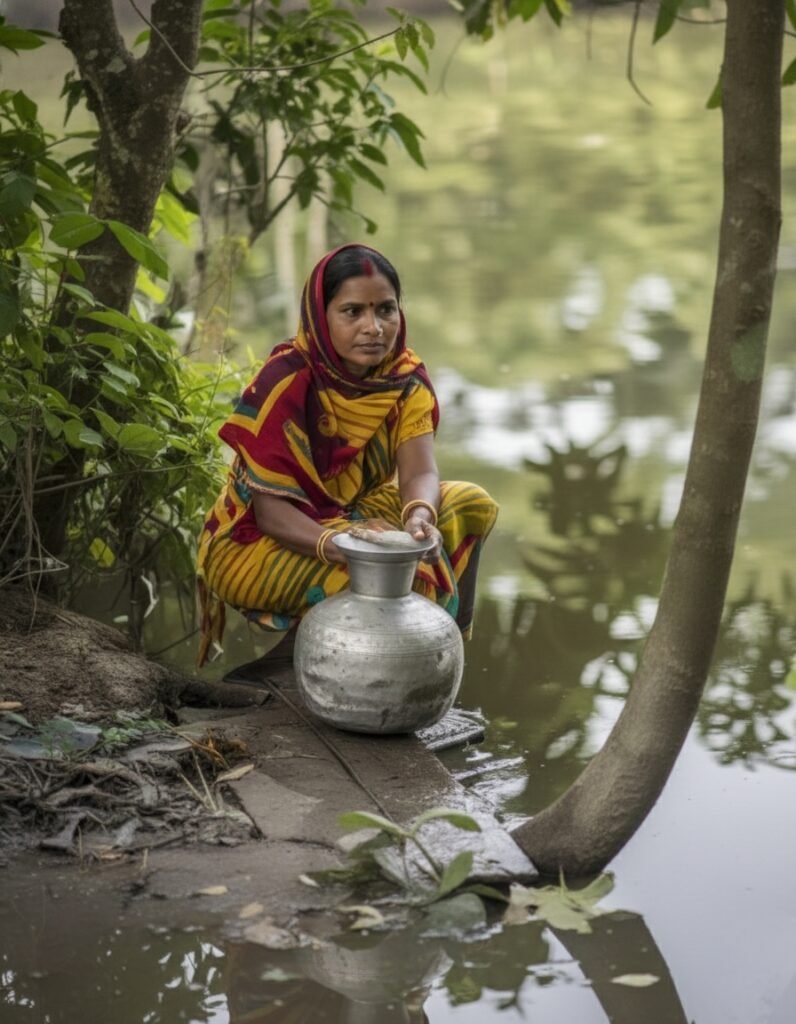
Waste management emerged as one of the most pressing sustainability challenges. The study found that 74.8 percent of farmers connected animal sewage lines directly to ponds, rivers, or lakes. Alarmingly, 48.5 percent of those water bodies were also used as sources of water for human consumption.
In addition, 32.0 percent of households stored animal dung near kitchens or living areas, increasing the risk of food contamination and disease transmission. The practice of using animal dung as fish feed was reported by 29.8 percent of farmers, reflecting a common integrated farming approach that prioritizes economic efficiency over environmental safety.
While these strategies reduce costs and maximize resource use, they also introduce harmful pathogens into water systems. Research from multiple regions shows that fecal contamination from animals in domestic environments can equal or exceed contamination from human waste. Children, who frequently play near contaminated soil and water, face particularly high risks.
These findings demonstrate how local waste-management decisions can degrade ecosystems, contaminate drinking water, and undermine public health far beyond the household level.
Disease Management Under Economic Pressure
Livestock disease management in smallholder systems is shaped by financial constraints. When animals fall ill, isolation or treatment is often impractical. Farmers may sell sick animals quickly or slaughter them to reduce losses. In some cases, dead animals are disposed of in open spaces or nearby water bodies.
The study revealed that 64.0 percent of farmers regularly checked their animals’ health, and 76.5 percent consulted veterinarians when possible. Despite this, preventive practices remained inconsistent. Only 52.5 percent of farmers vaccinated their livestock against anthrax, and vaccination coverage for other diseases such as foot-and-mouth disease and rabies was similarly uneven.
Although awareness of diseases like rabies was relatively widespread, practical knowledge of infection control and safe carcass disposal was limited. This gap between awareness and action reflects systemic barriers rather than individual failure. Farmers often know what should be done but lack access to affordable veterinary services, infrastructure, or training.
Household-Level Health Risks
The health consequences of livestock keeping extend beyond farmers themselves. In households where animals are kept close to living spaces, all family members face exposure risks. Studies consistently document respiratory problems, skin conditions, gastrointestinal illnesses, and allergic reactions among livestock handlers.
Protective equipment such as gloves, boots, or masks was rarely used. While handwashing was common, other protective measures were viewed as inconvenient, uncomfortable, or financially inaccessible.
Women, who typically manage feeding, cleaning, and waste disposal, experienced the highest levels of exposure. Children frequently accompanied adults during livestock-related tasks, increasing early-life contact with pathogens. These patterns highlight the gendered and intergenerational nature of livestock-related health risks—an issue often overlooked in sustainability discourse.
Inequality in Knowledge and Capacity
Livestock management practices closely reflected disparities in education and income. Farmers with better access to information and veterinary services were more likely to adopt safer practices, including vaccination, improved housing, and cleaner waste handling.
In contrast, poorer households depended heavily on traditional methods passed down over generations. While culturally valuable, these practices are increasingly insufficient to manage modern disease, environmental, and climate-related risks.
This inequality is structural, not behavioral. Sustainable transformation requires closing gaps in access to training, services, and affordable alternatives—particularly for women and marginalized farmers who play central roles in daily livestock care but remain excluded from formal support systems.
Smallholder Livestock and Global Sustainability Threats
Unsafe livestock management practices contribute directly to multiple global challenges:
- Increased spillover of zoonotic diseases
- Accelerating antimicrobial resistance
- Contamination of soil and freshwater systems
- Food-safety risks from contaminated animal products
- Heightened vulnerability to climate change through land degradation and emissions
These issues transcend national boundaries. Local practices, repeated across millions of households, accumulate into global risks. Yet smallholder farmers should not be framed as the problem. Their adaptive knowledge and close environmental relationships position them as essential partners in sustainable solutions.
Practical Pathways Toward Safer and More Sustainable Systems
Evidence from the field suggests that meaningful improvement does not require costly technologies. Instead, progress depends on locally appropriate, low-cost, and community-driven approaches:
- Strengthening community-based veterinary services
Mobile clinics and trained local animal-health workers can dramatically improve disease prevention. - Hands-on training in waste and disease management
Demonstration-based learning helps translate awareness into practice. - Promoting simple protective measures
Boots, gloves, improved ventilation, and basic hygiene can significantly reduce exposure risks. - Applying One Health at the local level
Coordinated action between human, animal, and environmental health sectors is essential. - Empowering women in livestock management
Targeted training for women improves household practices and long-term outcomes.
These interventions are scalable, flexible, and transferable across diverse smallholder contexts.
Conclusion: Sustainability Begins at the Household Level
Smallholder livestock systems sit at the heart of global food security, yet they remain among its most vulnerable components. The lived realities of rural farmers in Bangladesh mirror those of millions worldwide, where tradition, necessity, and limited resources shape everyday decisions.
Sustainable transformation depends on recognizing farmers not as sources of risk, but as partners in resilience. The goal is not to replace traditional knowledge, but to reinforce it with scientific insight, institutional support, and equitable access to resources.
In a world where disease, pollution, and climate impacts cross borders with ease, the future of sustainable food systems may be shaped in the smallest livestock shelters—where humans, animals, and the environment coexist.
Share this article

Fatema Aktar Shanta
She is an independent researcher working within the One Health framework, with a focus on smallholder livestock systems, zoonotic risks, and sustainability in low-resource settings. Her work draws on field-based evidence to inform public health and resilient food systems in the Global South.