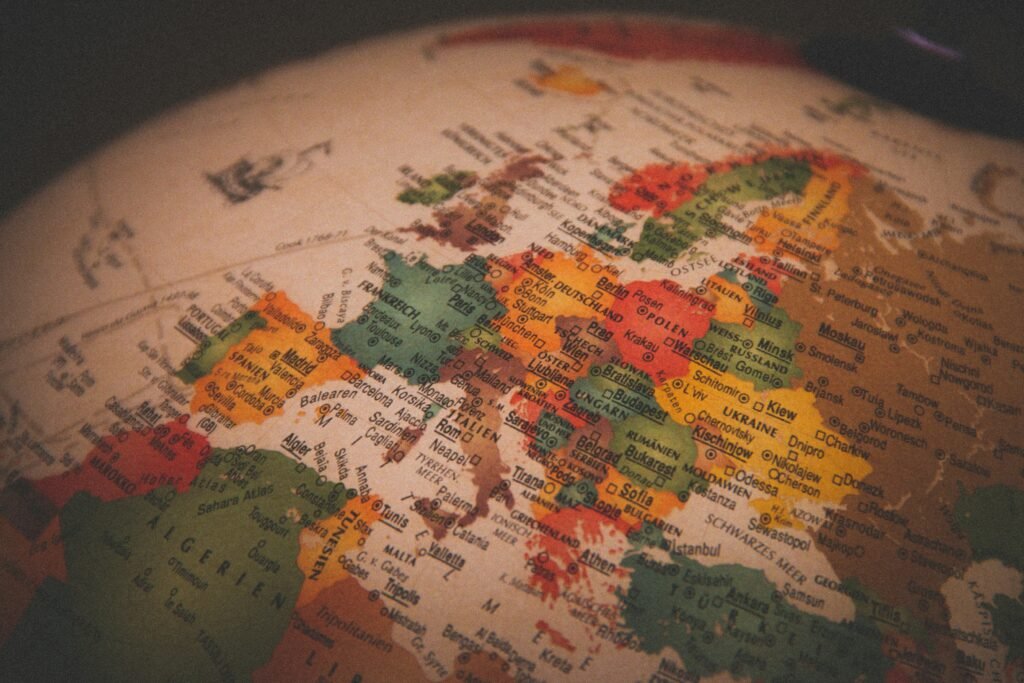

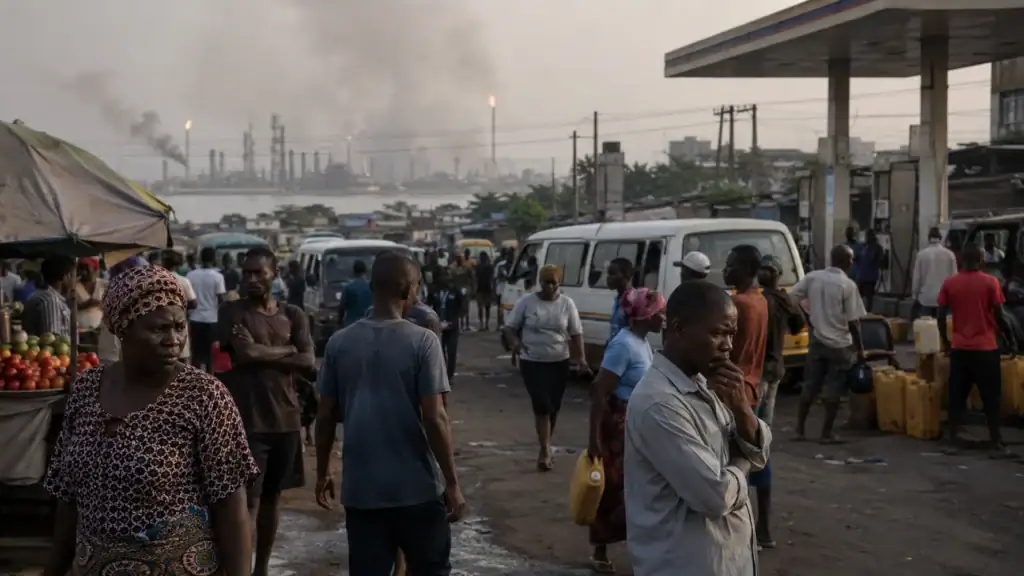
When missiles strike an oil facility in the Middle East, the explosion echoes thousands of miles away—not in sound, but in the rising cost of fuel in Dhaka, Nairobi, Juba, and many other parts of the world.
The people most harmed by global conflicts are rarely those firing the weapons or negotiating the ceasefires. More often, they are ordinary citizens in countries that never chose to be part of the battle. Many of these nations are already struggling with food insecurity and economic distress, where even contemplating involvement in war has become an unaffordable and unnecessary luxury.
This is the quiet violence of interconnected systems: decisions made in foreign capitals, multilateral institutions, and corporate boardrooms translate, through invisible chains of cause and effect, into empty plates, darkened homes, and broken livelihoods in communities that had no seat at the table.
As the world continues to witness the impact of the long-lasting war between Russia and Ukraine, the U.S.-Israeli war against Iran has brought a new blow to ordinary people.
The Russia-Ukraine war severely affected wheat prices in Bangladesh and around the world, pushing prices to some of their highest levels in nearly 15 years. At the same time, interest rate hikes by the U.S. Federal Reserve can weaken currencies across the Global South, making imports more expensive for millions of families already struggling to survive.
Yet for many people, these connections remain abstract. International summits, trade negotiations, and geopolitical tensions often seem distant from daily life. But their consequences are deeply personal. Take fuel prices as an example.
Bangladesh is almost fully dependent on imported fuel and energy. When geopolitical tensions disrupt global oil supplies—whether due to war in Ukraine, conflict in the Middle East, or sanctions between powerful nations—global oil prices can rise rapidly. That increase travels through global shipping routes, financial markets, and import contracts before finally reaching local consumers.
For a middle-class family in Dhaka, it may mean paying more for transport and electricity. But for a farmer in northern Bangladesh, it means something far harsher: higher irrigation costs, more expensive fertilizer transportation, and shrinking profit margins during harvest season. In Rajshahi, transport workers and small vendors often describe fuel price hikes as “silent disasters.” When diesel prices rise, bus fares increase, freight costs surge, and the price of essentials climbs almost immediately. Consumers buy less. Small businesses earn less. Debts grow quietly.
Ereneo Mogga, an electrical engineer who lives in one of the worst-affected parts of Juba, told the BBC that power often goes off at 4:00 p.m. and does not return until 4:00 a.m. the next day. “These paralyses most businesses,” he said, adding that some of those who can afford it are switching to solar power. “It is very expensive, though, but it costs less in terms of consumption.”
The global decision may have been military or strategic. The suffering becomes deeply local.
Similarly, despite being 2,710 miles, or 4,360 kilometers, from Iran, Kenya is reeling under the pressure of war. Kenya has raised diesel prices to a record Sh242.92 per liter, marking its second major fuel increase in weeks amid global oil supply fears. The sharp rise is expected to push up transport fares, food prices, and manufacturing costs in East Africa’s largest economy.
The Fertilizer Shock: When War Attacks the Harvest
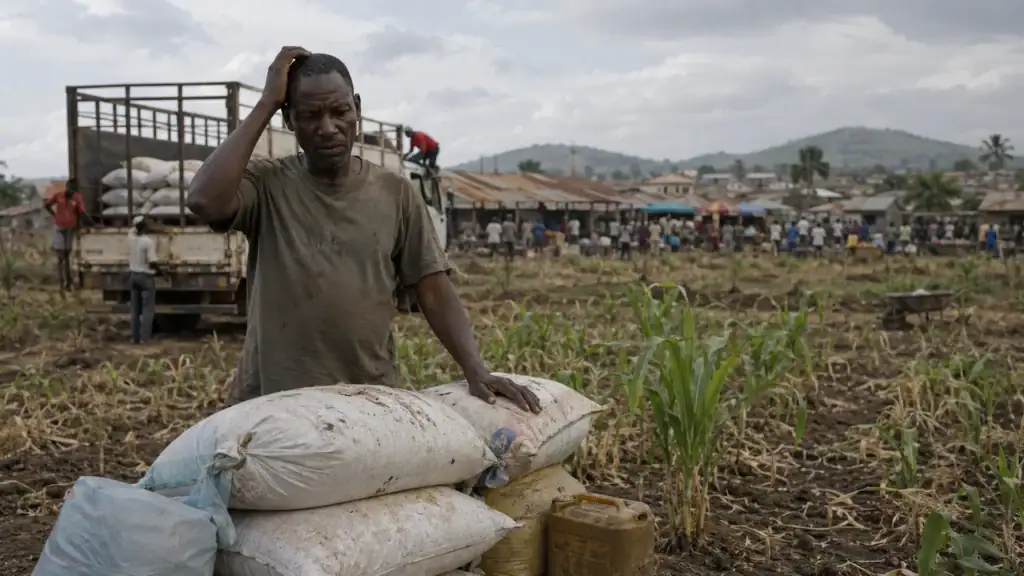
Beyond fuel, a quieter but potentially more devastating crisis is unfolding in the fields. The fertilizer shock has been largely overlooked in mainstream news coverage. The Gulf is a major artery for urea, ammonia, Sulphur, and other fertilizer inputs, and conflict-related disruption has already tightened supply.
Prices for urea, the most popular synthetic nitrogen fertilizer, have increased by about 30 percent over the past month. The timing could hardly be worse: northern hemisphere spring planting is underway, meaning farmers from sub-Saharan Africa to South Asia are making purchasing decisions against a backdrop of price spikes and deep uncertainty.
For Bangladesh, this compounds an already precarious situation. Higher fuel prices feed directly into production costs across the economy, from manufacturing to agriculture, through cost-push inflation, where businesses pass on rising costs to consumers. According to the Bangladesh Bureau of Statistics, since March 2023, the headline inflation rate has hovered around nine percent, and higher fuel prices are likely to push it further. A farmer who was already paying more to pump water from the ground now faces higher costs for the fertilizer that feeds his crops and the diesel that carries them to market—all from a war he had no part in.
The Chokepoint That Chokes Everyone
The chain connecting a missile strike in the Persian Gulf to power shortages in Dhaka passes through one of the world’s most strategically vital waterways. The U.S.-Israeli attacks on Iran and Tehran’s subsequent retaliatory strikes have effectively disrupted the Strait of Hormuz, a critical energy corridor through which nearly 20 percent of global petroleum consumption moves. Roughly 20 million barrels of oil per day flow through the narrow passage from the Gulf’s major oil-producing nations to international markets, making any disruption there a direct threat to energy-importing economies such as Bangladesh.
Major shipping companies, including Hapag-Lloyd and Maersk, have suspended or limited vessel transits through the Strait. In the Red Sea region, the Houthis have resumed attacks on commercial shipping in support of Iran. The Asia-Europe shipping route is expected to be extended by approximately 20 days, absorbing an additional 2.5 million twenty-foot equivalent units of global shipping capacity. Insurance costs have also surged sharply.
For a country like Bangladesh, geographically distant but economically tethered to these routes, the shipping detour is not an abstraction. Every additional day a container spends at sea is a cost passed along the chain, eventually landing on the plate of a family in Mirpur or the ledger of a garment exporter in Gazipur.
Bangladesh: Among the Worst Hit
Bangladesh is among the worst-hit economies and is projected to experience a severe impact on GDP growth, creating recession-like conditions. There have been fears of unrest due to the fuel crisis. Universities were closed in advance of the Eid al-Fitr holidays to conserve electricity and fuel. Shopping canters and commercial establishments have also been directed to shut down by 8:00 p.m.
The World Bank said in April that it expects growth in Bangladesh to slow to 3.9 percent in the fiscal year ending in June 2026, warning that a prolonged Middle East conflict could fuel inflation, widen the current account deficit, and strain public finances through higher energy subsidies.
Rising global energy prices are also expected to place Bangladesh’s fragile finances under further strain, with the government likely to incur an additional $3 billion to $4 billion in energy import costs, according to Finance Minister Amir Khosru Mahmud Chowdhury.
Kenya’s Fuel Shock: A Case Study
Kenya shows how a distant war can become a local economic crisis almost overnight. When Russia invaded Ukraine in February 2022, the consequences were not limited to Europe. Countries across Africa faced higher fuel costs, rising food prices, and renewed inflationary pressure. Kenya was one of them.
Kenya was also among the first African countries to condemn Russia’s actions, but its moral position did not protect it from the economic aftershocks of the war. Like many import-dependent economies, Kenya relies heavily on global markets for conventional fuel. When international supply chains are disrupted, the impact quickly moves from shipping routes and oil markets into public transport fares, food distribution, electricity costs, and household budgets.
The recent fuel-price pressure linked to the Middle East conflict has deepened that vulnerability. Higher diesel prices do not only affect drivers; they affect farmers moving produce to market, factories paying more for production, and families already struggling with the cost of basic goods. Kenya’s experience is a reminder that modern wars do not remain inside borders. They travel through prices, currencies, trade routes, and debt—reaching people who never had any role in starting them.
The Invisible Victims of Visible Wars
The coconut seller in Rajshahi does not watch satellite feeds from the Strait of Hormuz. The ride-share driver in Dhaka did not vote for or against any military alliance. The flower farmer in Kenya’s Rift Valley has never met a defense contractor or attended a UN Security Council session. Yet all of them absorb, in their bodies and their bank balances, the decisions made in foreign capitals by people who will never know their names.
This is the moral and analytical gap that international discourse consistently fails to address: war is always discussed in terms of the parties involved, but suffered by millions who are not. The quiet violence of interconnected systems does not announce itself with rockets or press conferences. It arrives as a fuel queue that stretches around the block, a school fee that cannot be paid, a harvest that cannot be transported.
Until the architects of geopolitical conflict are held accountable for these cascading human costs—until the suffering in Dhaka, Nairobi, Juba, and Rajshahi is counted as part of the true cost of war—the world will continue to address the explosions while ignoring the echoes.
Share this article