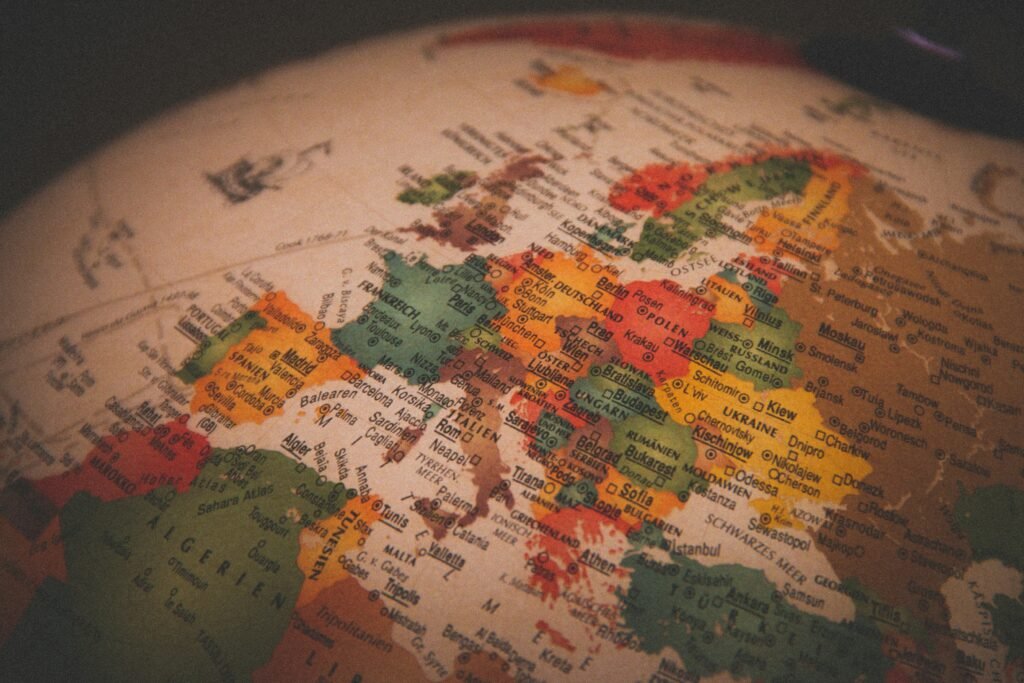


During the twentieth century, there was a time when many countries in Asia, Africa, and Latin America stood at similar economic crossroads. Many suffered from limited resources, geographical disadvantages, weak institutions, or the deep scars of colonial rule. However, some of these countries chose to move beyond their bottlenecks and rise above their limitations, while others struggled to overcome political instability, poor governance, and economic stagnation.
Fast forward to the twenty-first century, and we can see a remarkable difference. Some nations that were once poor or vulnerable have become developed economies with efficient infrastructure, strong industries, and improved living standards. Others are still struggling to meet basic development goals. The factors behind this great divergence are the areas explored below.
Before the Korean War, there was one Korea in East Asia. After the war in the 1950s, the peninsula was divided into two states: South Korea and North Korea. Although they shared a common history, the division created two very different development trajectories.
South Korea gradually embraced export-oriented industrialization, international trade, investment in education, and closer integration with global markets. North Korea, on the other hand, adopted a highly centralized political and economic system, guided by state control, isolation, and military priorities. The result was dramatic. South Korea eventually became an economic powerhouse, while North Korea remained poor, heavily controlled, and internationally isolated.
It is not that South Korea was abundant in natural resources. In fact, the country had to build its future through human capital, discipline, planning, and industrial strategy. During its early years of development, South Korea invested strongly in education and health so that a skilled and healthy population could support national growth. It was this capable workforce that helped drive the country’s economic transformation.
North Korea also began with important industrial assets after the division of the peninsula. However, over time, its centralized command economy and heavy military focus limited its ability to adapt to the changing global economy. The state controlled production and priorities, and economic policy became closely tied to self-reliance and security concerns. As global trade, technology, and market competition expanded, North Korea remained largely closed and increasingly isolated. Its economic condition declined, and it has remained one of the world’s most restricted and underdeveloped countries.
Another useful comparison is between Bangladesh and Singapore. During the 1960s, Bangladesh was part of Pakistan, while Singapore was part of Malaysia. Within a few years, both became independent nations. In the 1960s, Singapore was a small island with no natural resources, limited land, and uncertain prospects. Bangladesh also began its journey with enormous challenges after independence, including war destruction, poverty, weak infrastructure, and political instability.
Yet Singapore bounced back much faster. Today, it is one of the world’s most developed and prosperous economies, while Bangladesh, despite major progress, is still working through the challenges of middle-income transition, job creation, institutional reform, and export diversification. Bangladesh is scheduled to graduate from the UN Least Developed Country category on November 24, 2026, a major milestone that also brings concerns about trade preferences and economic adjustment.
The reasons behind Singapore’s rise were similar in some ways to South Korea’s. Singapore relied on its most important resource: its people. Under the leadership of Lee Kuan Yew, the country focused on education, discipline, infrastructure, political stability, foreign investment, and global trade. It opened its doors to international business and positioned itself as a hub for finance, shipping, technology, and high-value services. Over time, Singapore developed one of the highest per capita income levels in the world, along with world-class education, healthcare, and public infrastructure.
Bangladesh’s journey was more difficult. After independence, it faced the destruction of war, famine, political assassinations, military rule, and repeated institutional instability. Its early economic policies included nationalization and state control, but later decades saw gradual openness, export growth, and private-sector expansion. Bangladesh found success through the ready-made garments sector, remittances from migrant workers, agriculture, microfinance, women’s participation in the labor force, and major improvements in public health. Still, the country continues to face challenges in education quality, healthcare capacity, governance, infrastructure, and industrial diversification.
From these comparisons, it can be seen that several factors influence why some countries develop faster than others. The four countries mentioned above did not all begin with abundant natural resources or perfect geography. Their later outcomes were shaped by policy decisions, investment in education and health, political stability, institutional strength, and the ability to connect with global markets.
When South Korea emerged from the Korean peninsula’s division and Singapore separated from Malaysia, their leaderships chose pragmatic and future-oriented policies. They focused on education, health, industrial capacity, and export competitiveness. These policies helped people engage in higher-skilled production, including cars, electronics, semiconductors, finance, and advanced services.
Another important decision was openness to foreign direct investment. Investors from developed countries brought capital, technology, market access, and industrial knowledge. This helped drive the economic engines of South Korea and Singapore. As people earned more, consumed more, and became more productive, the economy expanded further. Private ownership, competition, and ambition encouraged people to strive for better opportunities.
Meanwhile, Bangladesh and North Korea experienced long periods of political and economic difficulty. North Korea remained locked in a rigid centralized system. Bangladesh moved through socialism, military rule, and fragile democracy before gradually embracing broader market reforms. In Bangladesh, early nationalization policies, restrictions on the press, political favoritism, and weak institutions contributed to economic inefficiency and distrust. Later, military rule delayed democratic development, and the country had to wait until the 1990s for a more stable political and economic opening.
It is true that Bangladesh has made impressive progress over the last few decades, especially in public health, poverty reduction, disaster management, agriculture, women’s empowerment, remittances, and the garment industry. This progress became more visible after the country moved toward greater economic openness and democratic politics in the 1990s. If Bangladesh can now invest more seriously in education, health, technology, governance, and industrial diversification, its young population can become a powerful force for future development.
Bangladesh currently has a large youth population, especially between the ages of 18 and 35. If this generation receives quality education, technical training, healthcare, and employment opportunities, they can help transform the country’s economy just as the people of South Korea and Singapore helped transform theirs.
However, we will only have a limited view of economic success if we look only at Asia. To understand global development, we also need to look toward the West, where history offers different definitions of progress, power, and prosperity.
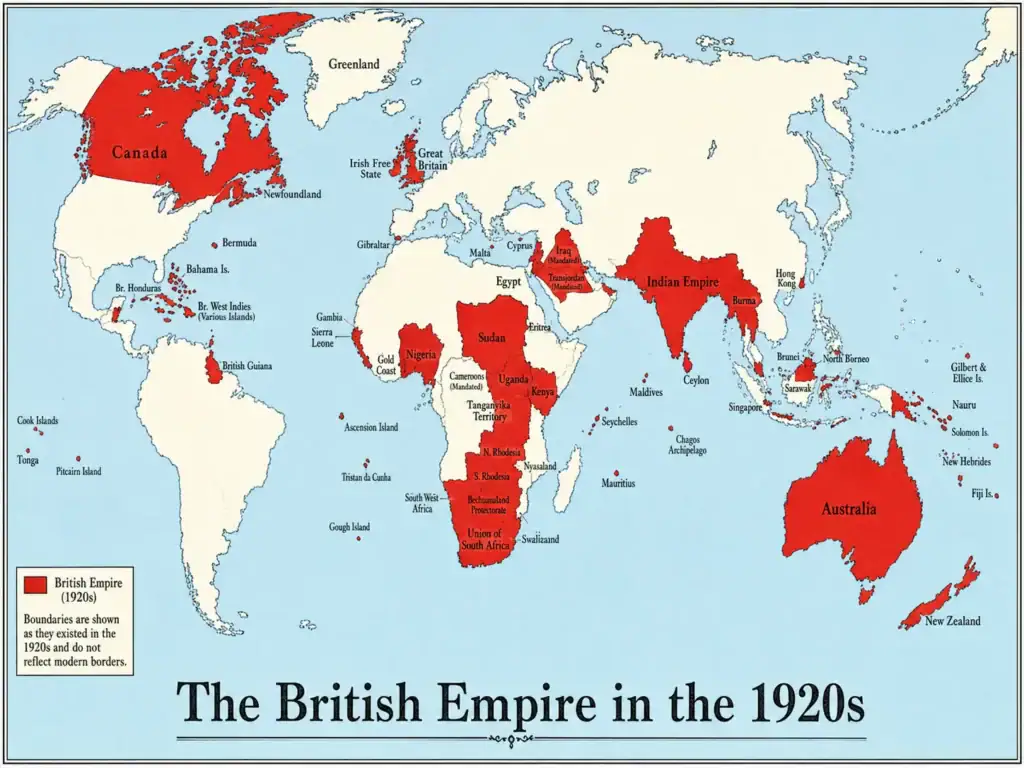
The economic history of the United Kingdom, popularly known as Britain, is important in this regard. Britain was not always the global power it later became. Its rise was shaped by trade, naval power, industrialization, and empire. Over several centuries, it built the largest empire in history, stretching across North America, Africa, Asia, Australia, and the Caribbean. Wherever the empire found natural resources, strategic locations, or labor, it tried to control them.
The British Empire created enormous wealth and global influence for Britain. But much of that wealth was built through colonial extraction, unequal trade, and control over foreign lands and people. Colonies supplied raw materials, markets, labor, and strategic advantages. This exploitation helped Britain become one of the strongest political and economic forces in the world, a position it held until the decline of empire and the rise of the United States after World War II.
After World War II, a new global powerhouse emerged, and it continues to hold major influence across the world: the United States. The U.S. inherited many institutional and cultural traditions from Britain but developed them within its own system of governance, innovation, industry, and immigration. Unlike Britain’s empire-centered model, America’s rise was shaped by abundant land and natural resources, industrial growth, financial power, military capacity, universities, technology, and large-scale immigration.
Natural resources helped make America economically strong. Its institutions, particularly in education, finance, science, and technology, attracted people from all over the world. Immigrants brought labor, ideas, ambition, and skills. This helped give the United States its image as the “land of opportunity.”
But was the United States innocent in its accumulation of wealth and power? Not entirely. The history of the United States is also tied to Indigenous dispossession, slavery, racial inequality, and exploitation. Enslaved Africans were forcibly brought to the Americas through the transatlantic slave trade, one of the most inhuman episodes in modern history. Their labor contributed to the growth of agriculture, trade, and wealth, while they themselves were denied freedom, dignity, and rights.

Africa suffered deeply from slavery, colonialism, and resource extraction. European powers not only took people from the continent through slavery but also divided African territories through colonial borders that often ignored ethnic, cultural, and historical realities. Natural resources were extracted, local economies were distorted, and many societies were left with weak institutions and fractured political systems. Later, corruption, conflict, poor governance, Cold War politics, debt, and unequal global trade further damaged Africa’s development prospects.
This does not mean Africa has no hope or no agency. Africa has immense natural wealth, young populations, cultural strength, and growing markets. But the historical damage caused by slavery and colonialism cannot be ignored. The continent’s struggle is not simply the result of internal failure. It is also the result of centuries of external control, extraction, and global inequality.
If we look at Asia, we see that countries like Singapore and South Korea succeeded by investing in people, adopting practical economic policies, building institutions, and connecting themselves to global markets. If we look at the West, we see that Britain’s dominance was tied to empire, while America’s rise was tied to resources, immigration, innovation, and institutional power. If we look at Africa, we see how slavery, colonialism, and external exploitation damaged the future of one of the most resource-rich regions on earth.
The era of direct empire is largely over. Today, the world is governed through technology, economic policy, political influence, finance, and global institutions. Countries that can master these areas will continue to benefit from a connected and globalized world. Countries that lag behind in technology, governance, education, and economic strategy will continue to face exploitation and stagnation.
The great divergence between nations is not caused by one single factor. It is shaped by history, leadership, institutions, education, health, resources, geography, political stability, global access, and the ability to adapt. Some countries rise because they prepare their people for the future. Others fall behind because they remain trapped by bad policies, weak institutions, conflict, or external exploitation.
The lesson is clear. Natural resources alone do not make a nation rich. Population alone does not guarantee prosperity. Geography alone does not decide destiny. What matters most is how a country uses its people, institutions, policies, and opportunities. Nations that invest in human capital, protect stability, encourage innovation, and connect wisely with the world can rise faster. Nations that fail to do so risk falling further behind.
Share this article

Muhammad A. Bashed
He is a Dhaka-based journalist. His writings have been published in many major newspapers in Bangladesh, including The Daily Star, The Business Standard, The Financial Express, and Daily Sun. His expertise lies in political and economic affairs in Bangladesh and around the world.