
The Indigenous peoples of North America—commonly referred to today as Native Americans, American Indians, Alaska Natives, or Indigenous peoples—represent some of the world’s oldest continuing cultural and political communities. They are not one single group, but hundreds of distinct nations, tribes, languages, and traditions.
Some older European writings used terms that are now considered outdated or inappropriate. For that reason, modern academic and editorial writing generally uses respectful terms such as Native American, Indigenous peoples, Native nations, or American Indian and Alaska Native communities, depending on context and community preference.
Long before the arrival of Europeans, Native American societies had established complex political institutions, advanced agricultural systems, extensive trade networks, and rich cultural traditions. They developed civilizations that flourished across diverse landscapes, from the Arctic tundra and the Great Plains to the forests of the East and the deserts of the Southwest.
European colonization dramatically altered Indigenous life through warfare, disease, forced displacement, land loss, and cultural assimilation. Yet despite centuries of hardship, Native American nations have preserved their identities and continue to make significant contributions to modern society.
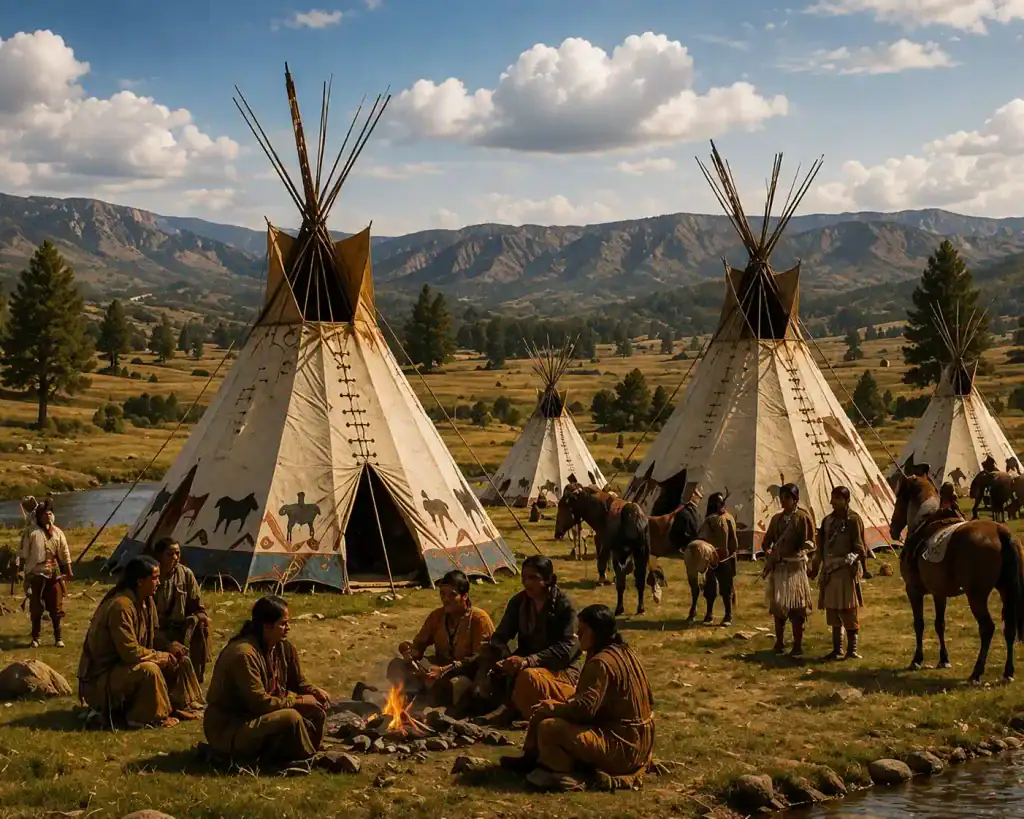
Origins and Early Migration
One widely discussed explanation for the early peopling of the Americas is the Beringia migration theory. During the last Ice Age, lower sea levels exposed a land bridge known as Beringia, connecting present-day Siberia and Alaska. Groups of hunter-gatherers are believed to have moved across or along this region and gradually spread throughout the Americas.
However, the story of Indigenous origins is complex. Archaeological evidence continues to develop, and many Indigenous nations also preserve their own origin stories and oral histories. Recent discoveries, including human footprints at White Sands National Park in New Mexico, suggest that humans were present in North America around 21,000 to 23,000 years ago—earlier than many previous theories had proposed.
Other evidence, including archaeological work associated with Monte Verde in Chile, also supports the idea that people reached the Americas earlier and through more than one route. Coastal pathways along the Pacific Ocean may have played an important role in the settlement of the continent.
Over thousands of years, these populations adapted to different environments and developed distinct languages, cultures, economies, and political systems. Before European contact, hundreds of Indigenous nations lived across North America, each with its own identity and relationship to land, community, and tradition.
Diversity of Native American Nations
Contrary to popular stereotypes, Native Americans were never a single nation or tribe. Instead, they formed hundreds of independent societies with unique traditions, beliefs, languages, and systems of governance. Among the well-known Native nations and communities are the Cherokee, Navajo (Diné), Lakota, Apache, Cheyenne, Comanche, Choctaw, Seminole, Pueblo peoples, and the Haudenosaunee, also known as the Iroquois Confederacy.
The Haudenosaunee Confederacy united multiple nations under the Great Law of Peace. It is often discussed by historians and scholars as an important example of Indigenous governance, diplomacy, and political organization. Some scholars and policymakers have also argued that Haudenosaunee political ideas influenced aspects of American federalism and representative government.
Each Native nation developed its own language, spiritual beliefs, artistic traditions, social structures, and systems of leadership. Some communities were primarily agricultural, while others relied more heavily on hunting, fishing, gathering, trade, or buffalo-centered lifeways on the Great Plains.
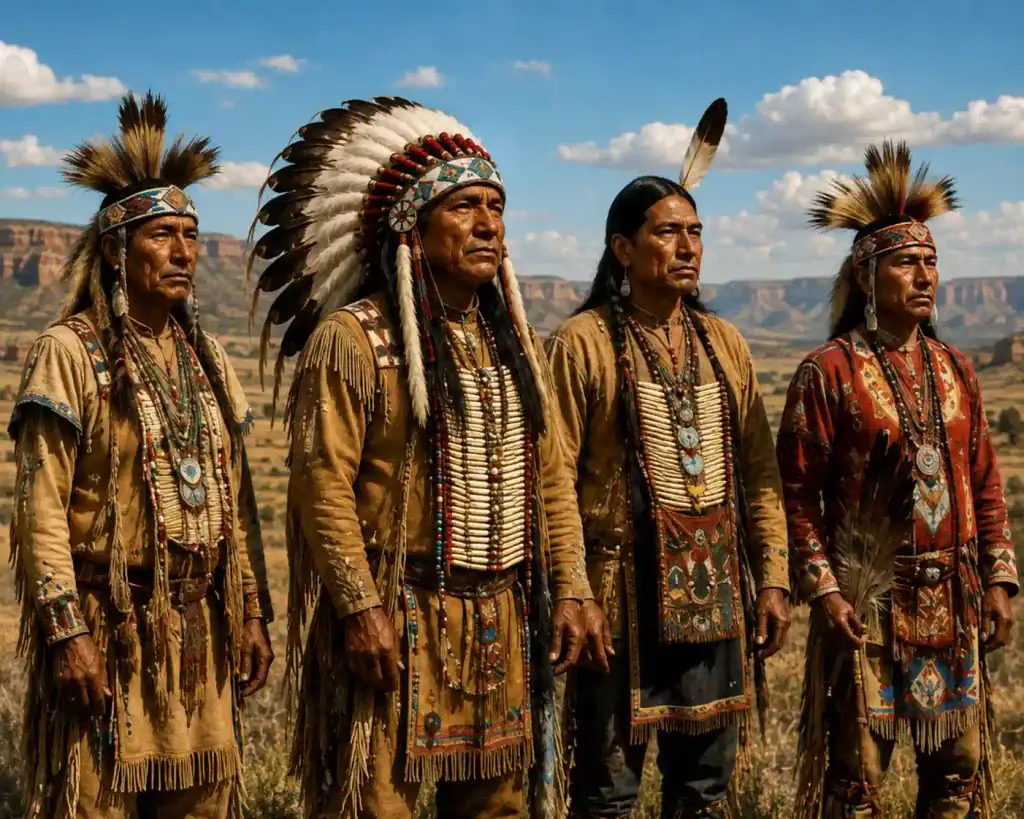
Economy, Agriculture, and Scientific Knowledge
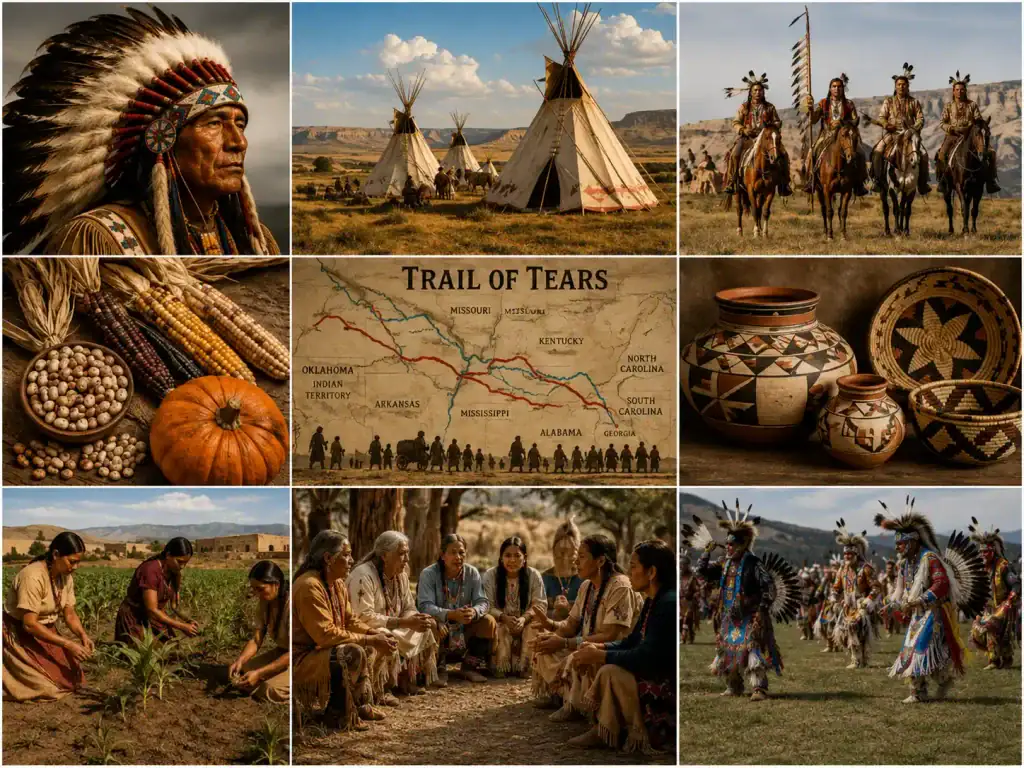
Native American societies demonstrated remarkable environmental knowledge and technological innovation. Agriculture formed the foundation of many Indigenous economies. One of the most important agricultural achievements was the cultivation of the Three Sisters—corn, beans, and squash.
This companion planting system supported soil health and crop productivity. Corn provided a structure for beans to climb, beans helped fix nitrogen in the soil, and squash leaves helped conserve moisture and reduce weeds. The Three Sisters became an important food and cultural tradition for many Indigenous communities.
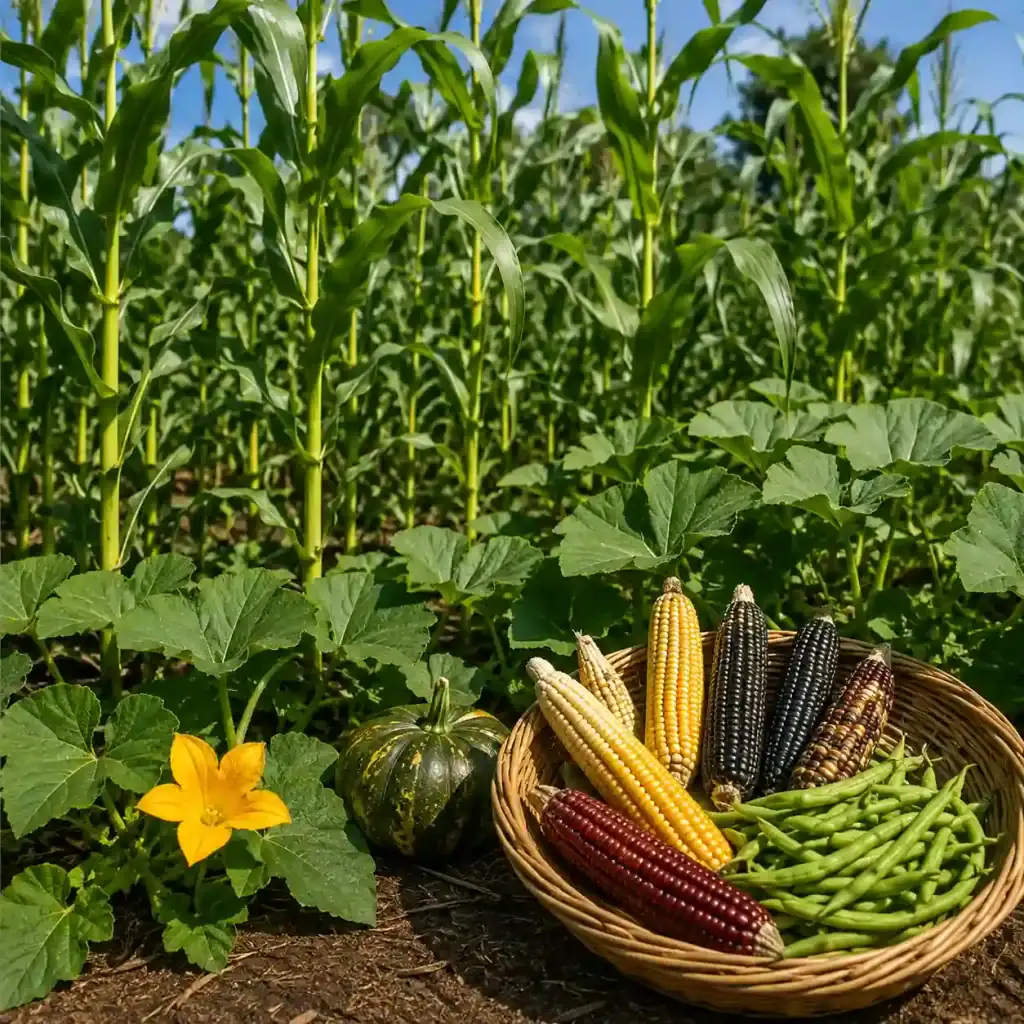
Indigenous peoples also domesticated and cultivated crops such as sunflowers, pumpkins, tobacco, peppers, potatoes, tomatoes, cacao, and numerous medicinal plants. Many of these crops later transformed global agriculture and diets through the Columbian Exchange.
Trade networks extended across long distances in North America. Copper from the Great Lakes, shells from coastal areas, turquoise from the Southwest, obsidian from volcanic regions, and buffalo products from the Great Plains moved through established exchange routes. These networks show that Native American economies were active, sophisticated, and deeply connected long before European settlement.
Native Americans also possessed extensive ecological knowledge. Many communities used controlled burning to manage forests, improve hunting grounds, support plant growth, and reduce wildfire risk. Today, traditional ecological knowledge is increasingly recognized by environmental scientists and land managers as valuable for conservation, climate resilience, and wildfire management.

Religion and Cultural Traditions
Spirituality played a central role in Native American life. Although religious beliefs varied widely among nations, many Indigenous traditions emphasized the deep connection between humans, animals, plants, rivers, mountains, and the natural world.
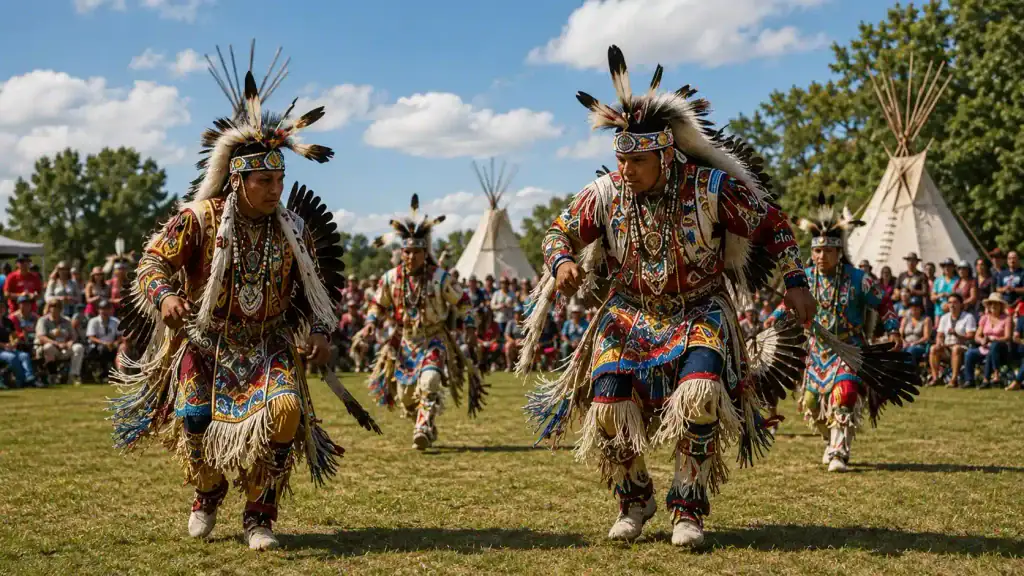
Ceremonies and gatherings such as the Sun Dance, Green Corn Ceremony, powwows, and seasonal harvest festivals helped reinforce community bonds and cultural identity. Storytelling served not only as entertainment but also as a way to preserve history, laws, values, and moral teachings across generations.
Traditional arts—including pottery, weaving, beadwork, basketry, wood carving, and ceremonial clothing—demonstrated extraordinary craftsmanship. These art forms reflected each nation’s unique identity, spiritual beliefs, and relationship with the land.
European Contact and the Columbian Exchange
The arrival of Christopher Columbus in 1492 marked one of the most significant turning points in world history. Although Columbus did not reach mainland North America, his voyages opened the way for Spanish, French, Dutch, and British colonization across the Americas.
European settlers introduced horses, metal tools, firearms, wheat, and new trade goods. At the same time, Indigenous peoples introduced Europeans to crops such as maize, potatoes, tomatoes, tobacco, and cacao, fundamentally changing global diets and economies through the Columbian Exchange.
However, European expansion also brought devastating consequences. Diseases such as smallpox, measles, influenza, and typhus spread rapidly among Indigenous populations that had little or no previous exposure to them. The scale of population loss varied by region, but scholars widely recognize that epidemic disease, warfare, displacement, and social disruption caused catastrophic demographic decline in many Indigenous communities after European contact.
Conflict, Removal, and Resistance
As European colonies expanded, competition for land intensified. Numerous wars and conflicts erupted between Native American nations, colonial governments, and later the United States government.
During the nineteenth century, the United States adopted policies aimed at removing Indigenous peoples from valuable agricultural lands. The Indian Removal Act of 1830, signed by President Andrew Jackson, authorized the forced relocation of Native peoples from their ancestral homelands to lands west of the Mississippi River.
One of the most tragic examples was the Trail of Tears. In 1838, more than 15,000 Cherokee people began the forced journey westward to Indian Territory, present-day Oklahoma. Many died from disease, starvation, exposure, and exhaustion. Other Native nations, including the Muscogee (Creek), Choctaw, Chickasaw, and Seminole, also suffered forced removal from their ancestral lands.
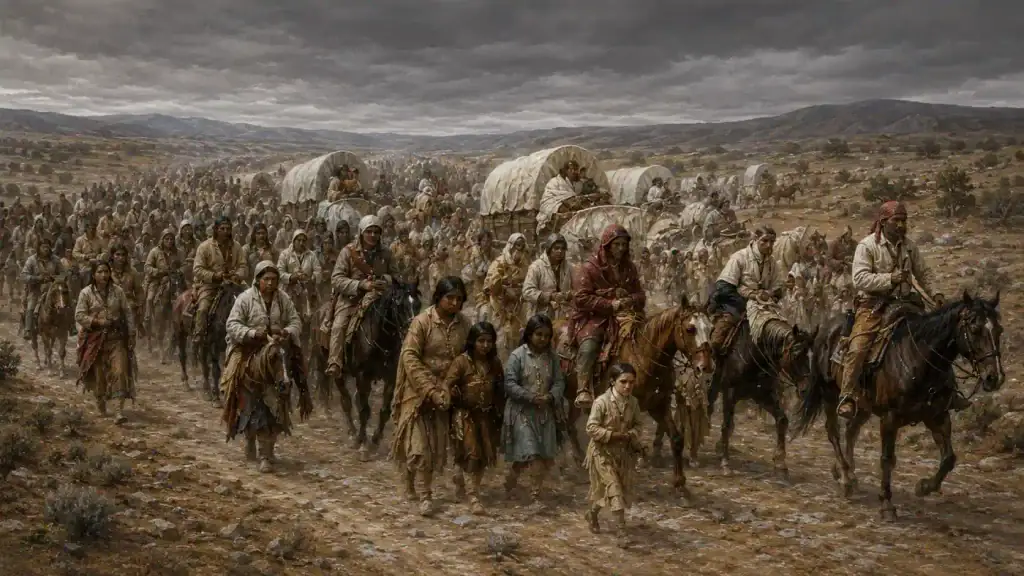
Native Americans resisted through diplomacy, legal action, and military defense. Leaders such as Tecumseh, Sitting Bull, Crazy Horse, Geronimo, Chief Joseph, and Red Cloud became enduring symbols of Indigenous resistance and courage.
The Battle of the Little Bighorn in 1876, in which Lakota, Northern Cheyenne, and Arapaho warriors defeated forces led by Lieutenant Colonel George Armstrong Custer, remains one of the most significant Native American military victories. Nevertheless, continued U.S. military campaigns and federal policies eventually confined many tribes to reservations.
Assimilation Policies and Cultural Survival
Following military conquest and land loss, federal policies increasingly focused on cultural assimilation. Beginning in the nineteenth century and continuing for more than a century, thousands of Native American children were sent to federal Indian boarding schools, where many were forbidden from speaking their Native languages, practicing traditional religions, or wearing Indigenous clothing.
The purpose of these schools was to assimilate Indigenous children into Euro-American society by separating them from their families, communities, languages, and cultures. The Department of the Interior’s Federal Indian Boarding School Initiative has documented the long-term harm caused by these policies.
The Dawes Act of 1887 further weakened tribal land ownership by dividing communal reservation lands into individual allotments. As a result, millions of acres of Indigenous land passed into non-Native ownership, deeply affecting tribal sovereignty, community life, and economic stability.
Despite these efforts, Native communities preserved their languages, ceremonies, oral traditions, and cultural values through families, elders, community networks, and cultural institutions. Their survival was not passive; it was an active defense of identity.
Native Americans in the Modern Era
Today, Native American nations continue to strengthen their political, economic, and cultural institutions. According to the Bureau of Indian Affairs, the United States currently recognizes 575 federally recognized tribes, each possessing a government-to-government relationship with the United States and a degree of sovereign authority.
Many tribes operate enterprises and community institutions in areas such as tourism, renewable energy, agriculture, education, healthcare, museums, and cultural preservation. Indigenous languages are also being revitalized through schools, community programs, digital learning tools, and language immersion efforts. The U.S. Department of the Interior has supported a national plan for Native language revitalization, reflecting growing recognition of the importance of language to cultural survival.
Native Americans have also contributed significantly to military service. During World War II, Native American Code Talkers used Indigenous languages to transmit military messages. The Navajo Code Talkers became especially well known for developing a secure communication system that played an important role in Allied operations in the Pacific Theater.
Contemporary Indigenous leaders continue to advocate for treaty rights, environmental protection, climate justice, education, healthcare, and the preservation of sacred sites. Native ecological knowledge increasingly informs conservation policy, wildfire management, biodiversity protection, and sustainable resource management.
Conclusion
The history of Native American nations extends far beyond narratives of conquest and tragedy. It is the story of civilizations that developed sophisticated governments, sustainable agricultural systems, vibrant cultures, and extensive trade networks long before European colonization.
Although colonization brought disease, displacement, warfare, land loss, and cultural suppression, Indigenous peoples demonstrated extraordinary resilience. Today, they continue to preserve their languages, traditions, and sovereignty while contributing to science, politics, education, environmental conservation, military service, literature, and the arts.
Understanding Native American history requires acknowledging both the injustices Indigenous peoples endured and the remarkable achievements they continue to make. Their legacy remains an essential part of the history of the Americas and of humanity itself.
Do You Have a Story to Tell?
We welcome fearless perspectives from emerging writers, citizen journalists, students, and global thinkers.
If your words challenge the ordinary or amplify the unheard, BreakOrDie Magazine is your platform to be seen and remembered.
Stay Connected With The Movement
Get early access to new stories, contributor calls, and behind-the-scenes insights from the BreakOrDie editorial team.
Share this article

Ali Ahmed Shopon
Ali Ahmed Shopon holds an M.S. in English Literature from Jahangirnagar University, Bangladesh. With a strong academic background in literature, culture, and critical analysis, he is interested in exploring history, society, identity, and human experience through thoughtful writing. His work reflects a commitment to learning, cultural awareness, and meaningful storytelling.